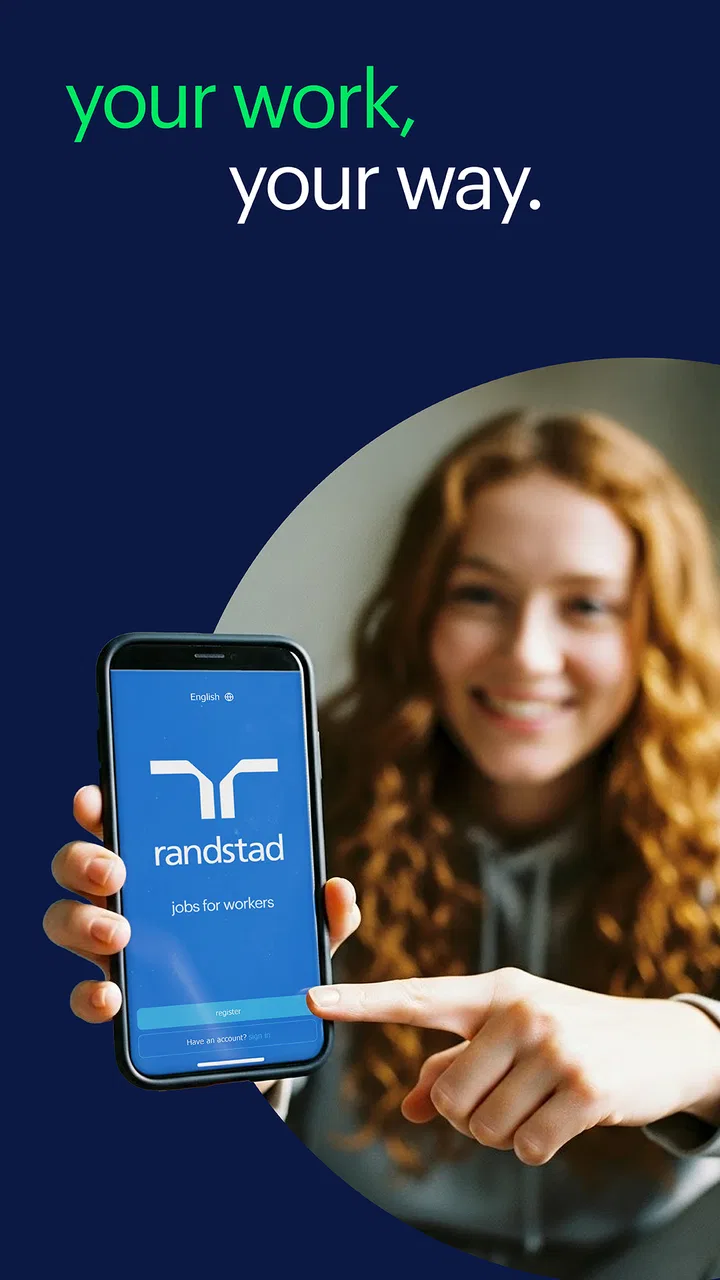
randstad: jobs for workers
- 4.5
- Rating
- 1.00M
- Installs
- Free
- Price

 Analysis by App-foxy
Finding temporary work often means repeating the same routine: search several job boards, compare locations, check whether a shift fits, and then try to keep track of applications. randstad: jobs for workers takes a more focused approach by putting Randstad’s employment opportunities on a phone, with the aim of helping people find nearby jobs without turning the search into a full-time administrative task. I tested it with that practical goal in mind: not whether it feels exciting on the first day, but whether it remains useful once the novelty wears off.
My first impression is that this is best understood as a working tool rather than a broad career platform. It belongs to the business category, is free to use, and is intended for everyone. The developer is randstad at work, and the app has been available since November 12, 2021. That background matters because the experience is built around employment through a staffing specialist, not around collecting every vacancy from every company on the internet.
From quick discovery to a dependable work-search habit
I find a focused work-search app most useful when it helps me turn a vague need into a practical next step, rather than simply giving me more listings to scroll through. For Randstad’s app, that means checking whether nearby opportunities fit my real schedule and travel limits, then deciding when to follow up. That everyday discipline is what separates a quick discovery tool from a dependable work-search habit.
You May Also Like

 Blood Strike: 2.5 Anniversary
Blood Strike’s Loadouts Turn Every Drop Into a Tactical Gamble
A close look at Blood Strike’s custom loadouts: how fast access to signature weapons reshapes its battle royale rhythm, rewards preparation, and narrows the gap between fights.

 Pandora - Music & Podcasts
Pandora’s Music Is Easy to Start, but Harder to Recover
Pandora’s strength is its low-effort path from a seed to a station. Its weak spot is how much confidence it asks you to place in connection, setup, and quiet recovery.

 8 Ball Pool
 Is Built on Rivalries, Rematches, and Routine
A close look at the rivalries, rematches, shared routines, and unanswered safety questions that turn a quick pool match into a persistent mobile community.

 Samsung Music
’s Quiet Strength Is Playing What You Already Own
Its reach comes less from spectacle than from dependable access to a personal library. That simplicity is both the app’s strongest retention engine and its ceiling.

 AccuWeather: Weather Radar
AccuWeather Review: A Quick, Clear Forecast for Everyday Decisions
For everyday plans, the best forecast is the one you can understand quickly. AccuWeather makes rain timing, radar, and local conditions easy to act on, with a few trade-offs.

 Hill Climb Racing
Why Hill Climb Racing Still Turns Crashes Into One More Run
A tiny car, a bumpy hill and one more upgrade: Hill Climb Racing keeps resurfacing because its simple chaos makes every near-miss feel personal.
More From Our News Desk



The first-week appeal is speed and focus
During the first week, the strongest benefit is the narrow purpose. Instead of opening a general job board filled with permanent office roles, freelance projects, career articles, and unrelated recommendations, I can use this app with a clearer question: what work is available near me, and can I act on it from my phone? That focus makes a difference when I am looking for temporary work, a short-term opportunity, or a way to get back into employment quickly.
The nearby-job angle is especially useful for people whose choices are limited by transport. A job that looks attractive on a national search can be impractical if the commute is expensive or public transport is unreliable. Starting with location helps me judge an opportunity in real-life terms rather than getting distracted by a job title. For shift-based workers, students, people between jobs, and anyone trying to fit work around existing responsibilities, that is a sensible starting point.
I also like the fact that the app is designed around mobile use. A phone is often the device available during a break, on a bus, or while walking through an area where local employers operate. The ability to search for work in those moments is more relevant than a polished desktop experience for someone who does not spend the day at a computer.
Its public reception suggests that this practical approach connects with many users. It has a 4.3 average from roughly 6.8 thousand ratings, while the app has passed one million installs. Those figures do not guarantee that every search will be successful, but they do indicate that the product has found a substantial audience beyond a small experiment.
What I would do before applying
I would not treat the first search result as an automatic match. My useful first-week routine would be to search by area, read each opportunity carefully, and compare the role with my actual availability before starting an application. “Near me” is only the beginning; the real test is whether the schedule, type of work, and travel demands fit my week.
A small but important habit is to keep a personal note of the roles I have already considered. A job-search app can make browsing feel productive even when I am simply opening the same listings repeatedly. Writing down the role, location, and next action prevents that loop. If I have applied, I note it. If I am waiting, I note that too. This turns the app into part of a process instead of letting it become an endless scrolling tool.
Another practical tip is to search at different moments rather than assuming the first session shows everything worth seeing. Temporary work can be time-sensitive, and a useful opportunity may not be visible when I happen to open the app. I would check when I am genuinely available to respond, because discovering a suitable shift while I am unable to follow through only creates frustration.
Where it stands beside ordinary job boards
Compared with a large general job board, this app feels more specialized. A general service may offer a wider mixture of employers and career paths, which is better when I want to compare permanent positions, specialist roles, and independent opportunities in one place. The Randstad app makes more sense when I value a direct route to temporary work and local vacancies over maximum variety.
Compared with searching through company websites, it can reduce the number of separate places I need to check. That convenience is valuable for someone who does not yet know which employers are hiring nearby. On the other hand, a company’s own careers page may provide more background about its culture, progression, and long-term positions. I would therefore use this app for discovery and immediate opportunities, while checking other sources when I am choosing a long-term career move.
It also differs from asking friends or local contacts. Personal recommendations can reveal workplace details that no listing communicates, but they depend on having the right network. This app gives me a more repeatable method when I need to search independently. The trade-off is that a listing cannot replace a conversation with someone who has actually worked there.
A realistic everyday scenario
Imagine I have finished a previous assignment and need work soon, but I can only travel within a manageable distance. On Monday morning, I open the app, look for nearby opportunities, and remove anything that conflicts with my availability. I then read the remaining listings instead of applying to everything. During lunch, I revisit the most suitable option and make sure I can explain my experience clearly. Later, I check whether there is a response or another relevant opening.
That routine is not dramatic, but it is exactly where the app can earn its place. It reduces the friction between “I need work” and “I have identified a realistic next step.” The value is not in making the job search disappear. It is in making a repeatable search easier to start and easier to fit around an ordinary day.
The month-to-month value depends on changing circumstances
After the first week, the question becomes whether I still need this kind of help. For someone actively seeking temporary work, the answer can be yes. Local opportunities change, availability changes, and a person’s priorities can shift from “anything suitable” to “something that fits my transport” or “a role that can begin quickly.” A focused app remains useful when those conditions are still moving.
For someone who has accepted a stable job and is unlikely to search again, the recurring value is naturally lower. This is not a daily entertainment app that creates its own reason to return. Its usefulness is tied to a real employment need. That is not a weakness by itself, but it means I would judge it by whether it supports an active work-search period rather than by how often I open it for no reason.
The app is also more valuable when I use it as a monitoring habit instead of a one-time download. I would set a simple schedule for checking relevant opportunities, perhaps around the times I know I can respond. The point is not to stare at the screen constantly. It is to create enough consistency that I do not miss a suitable opening while avoiding the fatigue of checking every few minutes.
One non-obvious trade-off is that convenience can encourage low-quality applications. Because a phone makes searching easy, I may be tempted to apply broadly without considering whether the job really matches my skills or schedule. That can waste my time and make the search feel less effective. I get better results when I use the app to narrow decisions, not to increase the number of applications at any cost.
How much maintenance does it require?
The maintenance burden is moderate rather than heavy. The app itself is free, and the current version is 7.4.0, with support for devices running Android 8.1 or later. That makes it accessible to people who are not using the newest phone, although anyone with an older device should check compatibility before planning around it.
My main maintenance task would be keeping my employment information and availability accurate wherever the app asks for them. An outdated profile can undermine a good search: I might appear suitable for work I can no longer accept, or fail to show information that would help an employer understand my experience. This is the kind of maintenance users often forget because it is less visible than searching.
I would also review my search approach whenever my circumstances change. A location that worked last month may no longer be practical. A temporary assignment may have altered my available days. If I keep using old assumptions, the app can appear unhelpful when the real problem is that my search criteria no longer reflect my life.
There is a useful distinction between maintaining the app and maintaining the job search. Updating the application is only one part. I still need to read carefully, prepare for contact, track what I have submitted, and respond promptly. Anyone expecting the app to manage the entire employment process without personal follow-through may find it disappointing.
Where fatigue begins
The biggest source of fatigue is repetition. Job searching already involves uncertainty, and repeating similar searches can become emotionally draining when applications do not lead to immediate work. A mobile interface removes some mechanical effort, but it cannot remove the waiting, the comparison, or the possibility that a promising role will not work out.
Another source of tiredness is the gap between a short listing and the reality of a job. A nearby role may still involve awkward hours, difficult transport, demanding physical work, or conditions that are not obvious from a quick glance. I would resist the urge to judge an opportunity only by its distance. The closer listing is not automatically the better listing if it creates other problems in my week.
There is also a risk of over-relying on one employment source. Because a specialized app feels convenient, I might stop checking direct employer pages, local networks, or broader job services. That can narrow my options. Randstad’s app is strongest when it is one deliberate part of a search strategy, not the only window through which I view the labor market.
I would skip it if I am mainly looking for highly specialized professional roles, international remote work, or a long-term career research tool. A broad professional network or a company’s own recruitment site may offer better context in those cases. I would also skip it if I am not prepared to keep my availability current and follow up on opportunities; no interface can compensate for an inactive search.
Questions I would ask before relying on it
Is it suitable for someone with no fixed work schedule? Yes, that is one of the situations where its local and temporary-work focus can be useful, but I would still compare every opportunity against my actual availability. Flexibility does not mean every shift is a good fit.
Can it replace all other job-search methods? I would not use it that way. It can reduce the effort of finding Randstad opportunities near me, but broader sources may reveal employers, career paths, or details that are outside its purpose. Using both approaches gives me better coverage.
Is it worth installing if I only need work for a short period? It can be, especially if the short period is urgent and local. The app’s value is strongest when I need a practical way to search and respond without building a complicated system. If my short-term need is already solved, however, there is little reason to keep checking it out of habit.
Will an older Android phone run it? The stated minimum is Android 8.1, so I would check my device before downloading. For compatible users, the free price removes one barrier to trying it, but I would still consider storage, battery, and connectivity as everyday practical issues when relying on a phone-based search.
How should I judge whether it is working for me? I would look beyond the number of listings viewed. A better measure is whether I am finding roles that match my location and availability, whether I can act on them efficiently, and whether the app helps me maintain a consistent search without creating more confusion. Those are more meaningful signs than simply spending more time inside the app.
Does it earn lasting space?
My long-term verdict is conditional but positive. randstad: jobs for workers earns lasting space on my phone when I am actively seeking nearby temporary work or expect my employment situation to change. Its recurring value comes from being a focused, accessible doorway to relevant opportunities, not from endless features or entertainment. That makes it easier to maintain as part of a practical routine.
I would not call it a complete replacement for every employment resource. Its focused nature is both its strength and its boundary. People who want a wide marketplace, detailed career exploration, or direct access to every employer should add other tools. But for a worker who wants to search locally, use a phone, and keep the process manageable, the specialization is helpful.
After the novelty fades, I would keep it installed during an active job search, check it deliberately, and remove it from my routine once it no longer serves a real need. That is a good outcome for this kind of app. It does not need to become a permanent daily destination; it needs to be dependable when work is the problem I am trying to solve. On that measure, the free Randstad app is a sensible option for the right kind of worker.
FAQs for randstad: jobs for workers
01What features does the Randstad app offer to job seekers?
The Randstad app provides users with a range of tools to enhance their job search experience. It includes features such as personalized job recommendations, a streamlined application process, and the ability to track application status. Additionally, users can set up job alerts and access career resources to improve their employability.
02Is the Randstad app available on both Android and iOS devices?
Yes, the Randstad app is available for download on both Android and iOS platforms. Users can find it on the Google Play Store for Android devices and the Apple App Store for iOS devices, ensuring a wide range of accessibility for job seekers across different mobile operating systems.
03How does the Randstad app ensure user data privacy and security?
Randstad prioritizes user privacy and data security by implementing advanced security measures. The app uses encryption to protect personal information and follows stringent data protection protocols in compliance with relevant laws and regulations. Users can feel confident that their data is handled safely and responsibly.
04Can I apply to jobs directly through the Randstad app?
Yes, the Randstad app allows users to apply directly to job listings. The application process is designed to be user-friendly, enabling job seekers to submit their applications with just a few taps. Additionally, users can upload and store resumes within the app for quick and easy access during the application process.
05Are there any costs associated with using the Randstad app?
The Randstad app is free to download and use. There are no hidden fees or subscription costs associated with accessing its features. Users can search for jobs, apply to positions, and utilize all available resources without any financial commitment, making it an accessible tool for all job seekers.
Pros
- User-friendly interface simplifies job search.
- Wide range of job categories available.
- Customizable job alerts keep you updated.
- In-app resume builder is convenient.
- Direct application feature saves time.
Cons
- Limited international job listings.
- Occasional app crashes disrupt usage.
- Profile setup can be time-consuming.
- Some jobs lack detailed descriptions.
- Notifications can be overwhelming.

randstad: jobs for workers
Gallery